
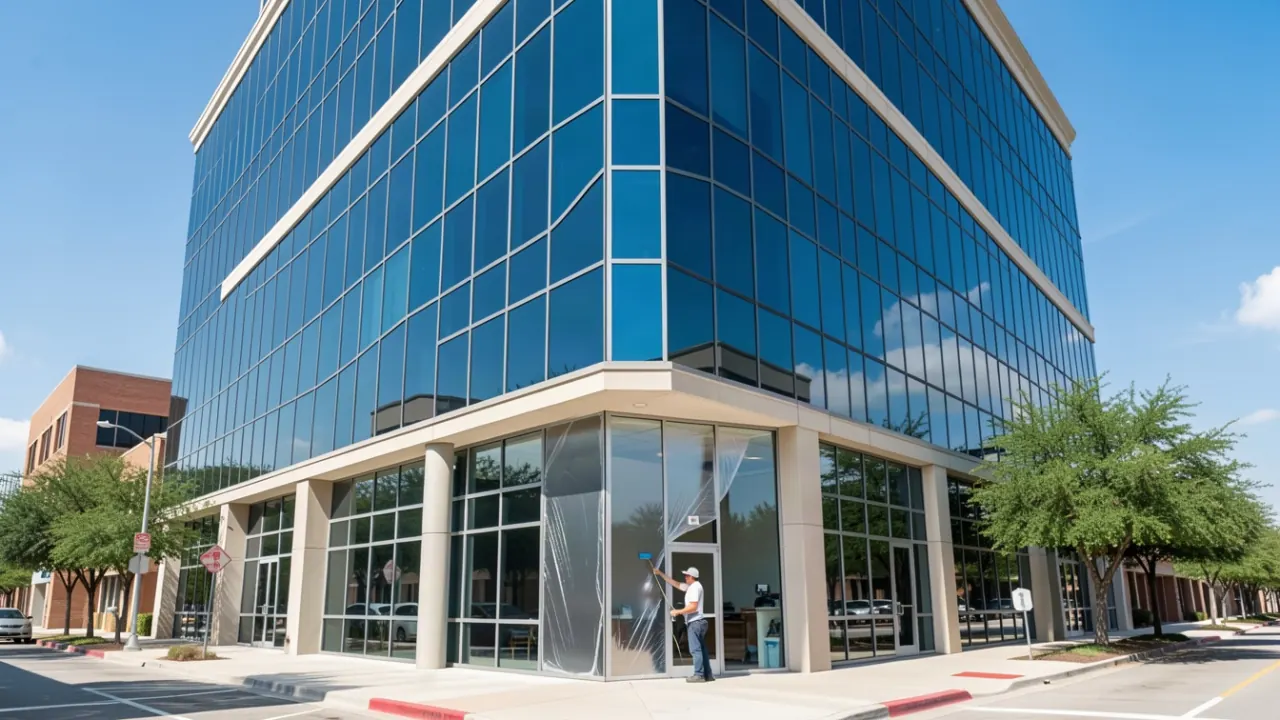
Who asks for full-space tinting
- Property managers fielding comfort complaints from one side of a building
- Tenants building out a new suite, with the landlord's sign-off
- Retailers with display windows in full sun
- Medical, legal and accounting offices that need heat control and privacy in the same space
- Schools and training centers with long runs of classroom glass
Storefront glass: displays, UV and glare
Display windows take the worst of it. In a GSA field study of non-metalized exterior solar film at a federal building in Colorado, sunlight hitting the glass dropped by 74 percent on average and the film blocked more than 99 percent of UV. Of 33 occupants surveyed, 76 percent preferred the filmed windows, and most did not notice the film was there. Peak electricity demand fell 6 to 9 percent. The GSA findings on non-metalized window film say it works best in warm climates on tinted double-pane glass without a low-e coating, and that buildings paying demand charges see better returns.
One storefront trade-off: darker or more reflective film makes it harder for shoppers to see your displays from the sidewalk during the day. Lighter spectrally selective film keeps the window readable while still cutting heat.
Planning a building or suite job
- Approval. Ask the property manager whether the building has a standard film, so the outside looks uniform.
- Phasing. Big jobs usually go floor by floor or side by side, often after hours.
- Access. Glass more than about ten feet off the floor needs lifts or scaffolding, which adds cost and time.
- Volume. One commercial price guide says large projects can run 20 to 30 percent less per square foot.
- Old film. Removal and adhesive cleanup add to the bill, so find out early if it's there.
- Tenant notice. Tell each tenant which days crews will be on their floor and what has to move away from the glass.
What is involved, in five steps
- Walk the building. The installer and the property contact go floor by floor and note glass type, orientation and problem areas.
- Sample panels. Test pieces go up on each side so the owner can sign off on the outside look.
- Written scope. The quote breaks out film type, square footage and price by floor or elevation.
- Phased install. Crews work around tenants, protect floors and furniture, and clean up each area.
- Closeout. A punch list walk, warranty documents and cleaning notes for the janitorial team.
What full-space jobs cost
| Job or film | Installed price reported | Source |
|---|---|---|
| Larger commercial projects | about $5 to $7 per sq ft | Thumbtack cost guide |
| Commercial film, all types | $6 to $18 per sq ft | Commercial installer price guide (2026) |
| Non-metalized solar film, interior | $11.85 per sq ft | GSA field study |
| Non-metalized solar film, exterior | $12.90 per sq ft | GSA field study |
| Volume pricing on large projects | 20 to 30 percent lower per sq ft | Commercial installer price guide (2026) |
Guide figures only. Your installer prices the building after measuring it. The cost page goes deeper on what changes a bid.
What to ask the installer
- Which film goes on each side of the building, and why?
- Who moves desks and protects furniture and floors?
- Do you need a lift or scaffold, and is it in the price?
- What is the phasing plan, and do after-hours crews cost more?
- Does the warranty stay with the building if a tenant or owner changes?
Each film type has its own page: solar window film for heat and security window film for street-level glass.
Areas we cover for office and storefront tinting
Window film FAQ
Do we need landlord approval to tint our suite windows?
Most leases require it, and many buildings want exterior glass to match. Get written approval and the building's film standard, if there is one, before you ask for quotes. Interior glass is often easier to get approved.
Can window film be installed after business hours?
Many commercial installers will work evenings or weekends so the office keeps running. Ask early, because after-hours crews may cost more and need building access arranged ahead of time.
Will customers still see our window displays after tinting?
With a light film, yes. Darker reflective films act like a mirror from outside in daylight, which hides displays. Ask the installer to put a sample on one display window and look at it from the sidewalk at midday.
Is it cheaper to film the whole building at once?
Usually per square foot. One commercial price guide puts the volume saving on large projects at 20 to 30 percent, and doing it in one phase avoids repeat setup and lift charges.