
Who solar film is for
Federal research on solar control film points to a clear best fit: large window areas facing south, east or west, with no exterior shading, in a climate with hot summers and mild winters. That describes a lot of Dallas commercial stock. Typical requests come from:
- Office floors where one side of the building runs hot every afternoon
- Medical and dental suites with patients seated near the glass
- Retail fronts with goods sitting in direct sun
- Lobbies, atriums and stairwells with tall glass
- Older buildings still on single-pane glass
Signs your glass needs it
- Blinds stay shut all afternoon and the lights stay on behind them
- One side of the building is warm while the thermostat reads fine elsewhere
- Screens and TVs are hard to read after lunch
- Carpet, furniture or stock near the windows has faded
- Old film is bubbling, peeling or discolored and needs to come off anyway
Reflective, ceramic and low-e film
Reflective film
Reflective film rejects the most heat and gives the glass a mirrored look from outside in daylight. In federal modeling for warmer climates, reflective films cut HVAC energy by up to 29 percent on single-pane clear windows and outperformed absorbing films in every case modeled. On that glass, solar heat gain coefficient dropped from .82 to .45.
Ceramic and spectrally selective film
These target infrared heat while letting more visible light through, so the building looks close to unfilmed. They cost more per square foot and suit owners who don't want a mirror look.
Low-e film
Low-e film also slows heat moving out through the glass, which helps in winter. GSA tested one at a federal building in Dallas, and occupants reported better comfort in both summer and winter.
Where it disappoints
The GSA findings on solar control films found retrofits were not generally cost-effective on double-pane bronze glass, and room-side glass on double-pane windows reached up to 140 degrees. Less winter sun can also mean more heating. GSA recommends energy modeling for the specific building before a big purchase.
What is involved, in five steps
- Survey. The installer counts panes, measures square footage and notes which way each wall faces.
- Glass check. Single or double pane, clear or tinted, any existing coating or film. This decides which films are safe and worth the money.
- Samples. Small pieces go on the actual glass so you can judge darkness and reflection from inside and from the parking lot.
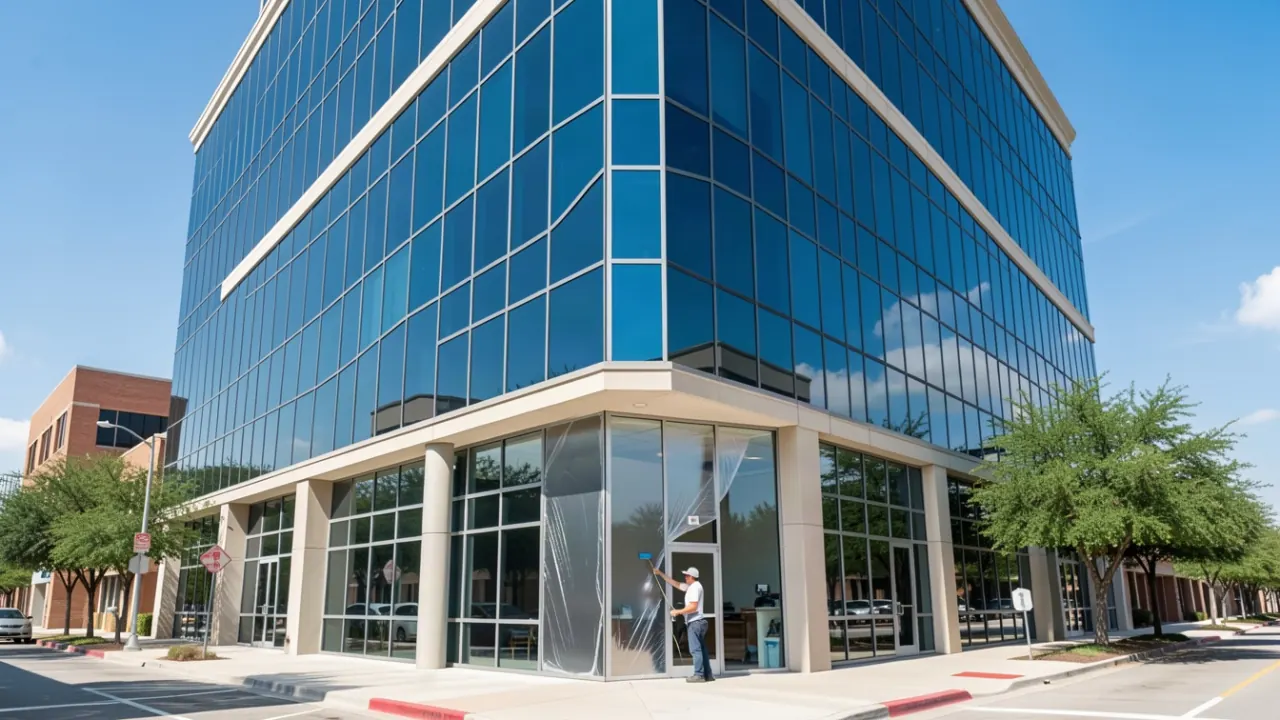
- Prep and install. Old film and adhesive come off, the glass is cleaned, and film is cut to fit and squeegeed down.
- Walk-through. Check the edges and clarity, then collect warranty papers and cleaning instructions.
What solar film costs
| Solar film type | Installed price reported | Source |
|---|---|---|
| Solar or UV film, general | $5 to $14 per sq ft | Angi cost guide |
| Reflective solar control | $6 to $10 per sq ft | Commercial installer price guide (2026) |
| Ceramic or spectrally selective | $11 to $18 per sq ft | Commercial installer price guide (2026) |
| Low-e film, single-pane glass | $7.75 per sq ft | GSA field study |
| Non-metalized exterior solar film | $12.90 per sq ft | GSA field study |
These are published ranges, not quotes. A measured visit sets your price. The cost page covers payback and how to compare bids.
What to ask the installer
- Which film and visible light level are you proposing, and why that one for this glass?
- Does the film maker approve this film on our glass type?
- What energy or comfort change should we expect on each side of the building?
- Who backs the warranty, the manufacturer or you, and what does it cover?
- Inside or outside application, and why?
Mixed jobs are common. Pair solar film with privacy window film on interior glass, or see office and storefront tinting for full-building projects.
Areas we cover for solar window film
Window film FAQ
Will solar film make the office too dark?
Not if you pick the right shade. Films come in many visible light levels, and ceramic or spectrally selective films block heat while staying fairly clear. In GSA testing on single clear glass, visible light dropped from .88 to about .64 or .67 with film. Look at samples on your own glass first.
Does heat blocking film help or hurt in winter?
It depends on the film. Low-e film slows heat loss, and occupants in GSA testing reported better winter comfort. Films that only block sun can raise heating use slightly, because the building loses free winter sun. In a hot climate like Dallas, summer savings usually matter more.
Which side of a building should get solar film first?
West and south glass in direct sun is the usual starting point, followed by east glass that bakes in the morning. GSA lists south, east and west orientation with no exterior shading as the best fit. North glass rarely needs heat film.
How much heat does solar window film actually block?
On single-pane clear glass in GSA data, solar heat gain coefficient fell from .82 to .54 with an absorbing film and to .45 with a reflective film. That is roughly a third to almost half less solar heat. Double-pane glass starts lower, so the change is smaller.